Saturday, December 15, 2007


Tuesday, December 4, 2007
Meeting Minutes and Project Update
UN Secretary General Call for Ugandan Arrests

Sunday, December 2, 2007
ICTs To Fight HIV/AIDS
USAID ICT activities in HIV/AIDS currently include:
-Strengthening HIV/AIDS awareness and prevention campaigns
-Using GIS to support disease surveillance
-Communicating guidelines and training materials for doctors, nurses and midwives for proper treatment of persons with AIDS
-Providing access to the latest medical information to the medical community and the general population
-Supporting diagnostic tools to disseminate and track test results
Also, one major program worth looking at is UNESCO's project "ICTs Helping to Fight HIV/AIDS" More really good information about this can be found at http://unesdoc.unesco.org/images/0014/001414/141417e.pdf
Thursday, November 29, 2007
WHO Health Priorities in Uganda

Wednesday, November 28, 2007
The possibility of laptops...

I recently found a great article on BBC.com that describes efforts of One Laptop Per Child (OLPC) in Nigeria. We have mentioned programs like this one before in class and I found it really reassuring to actually see positive results in the news. This article can be found at http://news.bbc.co.uk/2/hi/technology/7115348.stm
Although the BBC article concentrates on efforts made in Nigeria, I think it can be easily transferred to the Ugandan situation. OLPC is great in general because it allows for more efficient, successful and up-t0-date schooling. Currently the Fund does not work with a program of this sort. However, after studying about what happens to former child soldiers when they return t
 o their hometowns I think that something along the same lines as OLPC could be immensely helpful. Schooling for former child soldiers is a huge problem. Not only do most of these children or young adults have problems fitting in to their communities and schools but they generally have missed years of their education. In addition, many families in northern Uganda have been forced to migrate in order to stay away from the Lord's Resistance Army. Obviously, this increase in movement has caused lapses in education. Consequently, a program like OLPC could be used successfully to jump-start education efforts in war-torn areas.
Tuesday, November 27, 2007
Uganda in the News- The Commonwealth Heads of Government Summit

The Khaleej Times Online highlighted some of the similarities between Uganda and Pakistan, who was recently suspended from the Commonwealth Group until "rule of law" is reestablished. Public protests surrounded the buildings demanding that the human rights within their very boarders not go unnoticed. With more than 50 nations represented, the leaders continued with their agenda. President Museveni remained composed in the midst of the unfavorable crowds outside.
Overall, leaders were able to discuss issues of international concern. Climate change was on the top of the list for this year's agenda. Though Uganda underwent public scrutiny from its people for hosting the event, the international publicity they received for playing host was well worth the controversy for the developing nation.
For more information on the Summit, go to AllAfrica.com.
Sources:
<http://www.khaleejtimes.com/DisplayArticleNew.asp?xfile=data/opinion/2007/November/opinion_November97.xml§ion=opinion&col=>
<http://voanews.com/english/2007-11-25-voa19.cfm>
Sunday, November 25, 2007
A Royal Praise
http://www.cnn.com/2007/POLITICS/11/22/uganda.queen.ap/index.html?iref=newssearch
Monday, November 19, 2007
Better Internet for Uganda

According to a recent article published by Uganda's national independent newspaper, The Monitor, the Ugandan people will soon be on their way to better, faster internet connections. Seacom, an undersea fibre optic cable, is currently under construction and will connect African nations such as Uganda, Mozambique, and Kenya to international broadband cables in South Africa, India and Europe. An additional $650 million was given in funding today by the AGA Khan Fund for Economic Development, which will give significant aid to this endeavor. The cable is expected to greatly increase the speed and cost efficiency of broadband in Africa, as well as speed up economic growth. As stated by Mr. Cyril Ramaphosa, an investor in Seacom, "This is a tremendous opportunity for our continent, because the cable gives us the technical capacity for much closer integration into the world economy where Africa will significantly share in the new opportunities and efficiency gains arising from this project." One can only hope that such an increase in ICT will have a significant, positive impact on the nation of Uganda. For more information, please visit The Monitor Online at www.monitor.co.ug

War/Dance
 War/Dance is a very recent documentary set in the backdrop of the struggle in Northern Uganda. It follows a group of schoolchildren from a refugee camp to a national music competition. While certainly meant to move people with stories of unimaginable suffering, the movie caters to a Western movie audience with a strong message of hope and human spirit. Those with a more realistic grasp of the situation might be bothered by the lack of historical context and the general sense of optimism. However, the cinematography is fantastic and it won the documentary directing prize at this year’s Sundance Film Festival. It is certainly worth checking out and forming your own conclusion. Here’s the trailer:
Mobile Phones Have Reached Ugandan Villages
 A recent story written in the British Broadcasting Company (BBC) reports that mobile phones have made it successfully into the hands of Ugandan villagers. Local villagers set up phone shops near their homes and provide mobile phone access to their neighbors. To acquire funding for these shops, villagers take out loans from what is known as microfinance institutions. Microfinance institutions are establishments that provide loans and other means of building credit to provide those living in poverty with the resources to aid them in acquiring credit. Once the loan is acquired, the business villagers offer their customers handsets and car batteries to charge them is electricity is not available. Owners of these mobile shops have been quite successful. One of the owners was able to repay her loan within four months and began using her profits to make investments. Opportunities like these put economic power into the hands of those who need it the most.
Wednesday, November 14, 2007
Fund's Project Combats Important Health Issues

The Christian Counseling Fellowship (CCF), one of the Fund's current projects, is implementing some revolutionary strategies to promote the health of women and children in Uganda. The current under-five mortality rate of Uganda is at outstanding rate of 13.6%. To give you an idea of how extreme this is, developed countries such as America have an under-five mortality rate of only 0.7%. The principle reason for this 13.6% under-five mortality rate is that there are many Ugandan women who return from being held under rebel captivity with children and no means to provide for themselves or their children. These women who have been held under captivity have missed their opportunity to receive an education and do not have the skills necessary for obtaining a job. The women have difficulties finding work, have limited income and can not provide their families with food and the necessary medical attention to prevent illness. The CCF is addressing this issue by building a center that will provide these women with a place to obtain schooling and vocational training that will give them the skills to enhance their income. Not only is CCF creating this center, they are engaging women in local income-generating projects such as employing women at a popular restaurant and catering service.
For more information about this exciting project visit: http://www.ugandafund.org/projects.html
Tuesday, November 13, 2007
Meeting Minutes
The Moment We've All Been Waiting For...
We are happy to announce that the website for the Fund for War-Affected Children and Youth in Northern Uganda is now available for the public's viewing pleasure. The site will be continually updated as more information is available. Though we originally thought our assistance would be needed in mapping out the website, we were not able to do so due to time constraints. However, as Caroline has stated we will be putting our thinking caps on to provide an in depth critique of the developing site.
In the mean time check out http://www.ugandafund.org/index.html for more information regarding the fund!!
Our NEW plan and some meeting notes
Because of our meeting last week with Tom several things have been cleared up and I think we finally have a real, concrete idea of what we are doing and how it will be helpful for the Fund.
We will be creating an extensive critique of the Fund's current website (www.ugandafund.org). This critique will be displayed in an "one hundred question" format. In our final paper and final submission to Brandee we will be able to make clear suggestions on what we think could be done to improve the website as a whole.
We hope that this project, while maybe not the most glamorous, will be able to do some real good for the Fund. Currently the organization is not able to put sufficient time of money into the creation of a professional and well-functioning website. By putting together well thought out suggestions and critiques hopefully the Fund will be able to greatly improve their website without having to spend a great deal of time or money on the endeavor.
At our group meeting on Tuesday, November 13 we will each bring to the table our initial questions (based on our team member divisions) and from there be able to form our overall critique.
Friday, November 9, 2007
Show Them The Records, And They'll Show You The Money
The Red Cross
http://www.redcross.org/services/governance/0,1082,0_234_,00.html
Habitat For Humanity
http://www.habitat.org/giving/report/
The William J. Clinton Foundation
http://www.clintonfoundation.org/cf-financial-info.htm
Tuesday, November 6, 2007
Extra Extra Read All About It!
Empowering Hands, one of the current projects the Fund sponsors is being honored by Glamour Magazine as the first annual Women of the Year Fund. A group of female former abductees of the Lord's Resistance are working to provide hope for the teens effected by the ongoing national turbulence through peer-to-peer counseling, community education and other alternative activities that assist in the coping process.
To see the glowing coverage of Empowering Hands, check out Glamour's website at http://www.glamour.com/news/woty_fund.
Sunday, November 4, 2007
Group Progress Report 11/4/07
We are working with Ms. Brandee Butler, Program Officer for Human Rights and International Justice. I am the contact person for our group. At the moment, we are discussing ideas for the website: the layout, organization of content, and design. The following tasks were suggested by Professor Tom. We have allocated each task to a specific member of the group.
Lindsay: About us; - structure of the Fund - organizational structure of the Fund, where incorporated, members of committee, technicians, areas of expertise/concentration. genesis of the Fund.
Jenny: Partners/contributors - definition of "partner" and compare to a "donor" used by the Fund. list of partners and contributors available. special attention to relationship of the MacArthur Foundation to the Fund.
Caroline: What has been done (TA provided, reports financed by the Fund, project's financed and projects identified waiting for financing). what is planned for next 3/6/12 months. include but distinguish any related documents/TA not done by the Fund itself (prior to Fund creation).
Jackie:Services offered by the Fund - what does the fund do in addition to identifying and financing projects? who does this? (employees of fund, contractors, volunteers?) (this is part of "what we do?" who to contact for additional information a) technical b) non technical?
Lydia:
Donations - anything related to the topic of raising additional money for the Fund. fund raising goals, what raised to date, to what can one donate (general support, specific projects, people?), how can one make donations? where your money goes when you donate. what to expect.
We will be talking more with Brandee later this week to discuss the details of the website such as what she wants to be on the main page, what she wants us to emphasize, and any deadlines she needs to meet.
History of the Fund
The Fund for War- affected Children and Youth was established in response to the ongoing war that is being waged in northern
In response to this conflict, between July and November of 2005, the John D. MacArthur Foundation, in cooperation with the Canadian Government, conducted an assessment in northern
Thus, in 2006, the Fund for War-affected Children and Youth was established by the John D. and Catherine T. MacArthur Foundation, in partnership with other international donors. The Fund aims to provide long-term financial support to organizations in northern
- Access to education and income-generating activities for children and youth
- Access to traditional and formal forms of justice and truth-seeking
- Capacity building that will enable organizations to launch and sustain long-term projects; facilitate inter-institutional coordination and cooperation; and facilitate community participation, especially in regards to the reintegration of LRA returnees
- Access to services by under-served populations, especially those in remote camps for internally displaced persons; and
- The work of talented individuals and enterprising organizations, especially those that encourage entrepreneurship, in northern
Saturday, November 3, 2007
Joseph Kony's exclusive interview
This remarkable and contraversial interview can be found at:
http://news.bbc.co.uk/2/hi/programmes/newsnight/5124762.stm
Thursday, November 1, 2007
Meeting Minutes
It was decided that Lydia should send an email to Brandee, asking her some of our more pertinent questions about the Fund's structure, history and projects so that we could make progress in these areas. In addition, we have decided to set up a meeting with Professor Scialfa so that we may discuss our questions with him as well. This meeting will take place next Tuesday, November 6, and minutes will be posted for that meeting as well.
Sunday, October 28, 2007
Meeting Minutes
Look for another update through our Meeting Minutes on Thursday!
Child Soldier Prevention Act 2007
To end the use of child soldiers in hostilities around the world, and to condemn the conscription, forced recruitment or use of children by governments, paramilitaries, or other organizations in hostilities;
(2) that the United States Government should expand ongoing services to rehabilitate recovered child soldiers and to reintegrate them back into their communities--
(3) that the United States should work with the international community, including, where appropriate, third country governments, nongovernmental organizations, faith-based organizations, United Nations agencies, local governments, labor unions, and private enterprise-(4) that the Secretary of State, the Secretary of Labor, and the Secretary of Defense should coordinate programs to achieve the goals specified in paragraph
(5), and in countries where the use of child soldiers is an issue, whether or not it is supported or sanctioned by the governments of such countries, United States diplomatic missions should include in their mission program plans a strategy to achieve the goals specified in such paragraph;
(6) that United States diplomatic missions in countries in which governments use or tolerate child soldiers should develop, as part of annual program planning, strategies to promote efforts to end this abuse of human rights; and
(7) that, in allocating or recommending the allocation of funds or recommending candidates for programs and grants funded by the United States Government, United States diplomatic missions should give particular consideration to those programs and candidates deemed to promote the end to this abuse of human rights.
Wednesday, October 24, 2007
Background Information on Uganda
The Lord’s Resistance Army, or LRA, is led by Joseph Kony. Joseph Kony is thought to have special powers that he inherited from his pseudo-predecessor, Alice Lakwena. These powers give Kony immunity from bullets as well as give his organization some sense of legitimacy. Although, Kony describes the LRA as an organization that fights for the rights of the Acholi people, from the actions of the organizations it is difficult to believe this stance: It is from the Acholi people that Kony and his army kidnap new recruits and it is towards the Acholi people that most of the violent acts are directed.
These "new recruits" that the LRA kidnap are forced into membership of Kony’s movement. The male children become soldiers while the female children become "wives" of the Lord's Resistance Army leaders. Joseph Kony and his fellow LRA leaders force these children, as young as five, to kill their families or loved ones as initiation into the army. From there on out, the child soldiers are forced to take part in violent and bloody battles in order to increase the power and legitimacy of their leader. Many of the recruits are killed for not following through with orders or because they attempt to escape captivity. Those that remain in the LRA are brainwashed into becoming "true believers" of the LRA cause. If, somehow, a child escapes this horrible fate and returns to his or her hometown or family he or she is put in yet another awful situation. Former child soldiers are often not welcomed home, families and community members may not trust them or may even fear them. These children or young adults have other problems assimilating because of their missing education as well as because of the traumatic experiences in the army. Children that have luckily not been kidnapped into the army also face traumatic conditions. These children live in constant fear and many, like those filmed in "Invisible Children", travel every night to towns in order to feel safe from Kony's raiding parties.
Although there have been peace talks in the past, and in fact there are some peace talks underway currently, these have continuously failed to bring about the end to this horrific situation.
Tuesday, October 23, 2007
Invisible Children
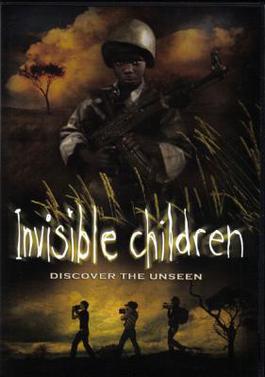
The term Invisible Children primarily refers to Ugandan children attempting to escape abuduction. Rebel soldiers of the Lord's Resistance Army (LRA) often abduct children and train them as child soldiers. Thousands of children would silently flee their homes at night to avoid drafting into the LRA. Children usually trek great distances to cities like Gulu searching for shelter in places such as hospitals and bus parks far away from rebel camps.
The Invisble Children film is based on the experiences of three college students: Jason Russell, Bobby Bailey, and Laren Poole. The three students originally set off to Sudan to "find a story" but ended up in Northern Uganda. The documentary was filmed in 2003. The filmakers have started a non-profit organization known as Invisible Children Inc. to combat the problem.
For more information, you can visit the Invisble Children website at: http://www.invisiblechildren.com/


Monday, October 22, 2007
The Fund for War-Affected Children and Youth in Northern Uganda
The main objective of the Fund for War-Affected Children and Youth is to help the youth in Uganda recover from war and rebuild their country. It is structured to provide financial resources to organizations that otherwise would have a difficult time accessing funding. The Fund was established in 2006 by the John D. and Catherine T. MacArthur Foundation and several international donors and funding is currently at $2.7 million. The goal is to raise $25 million from governments, foundations, corporations, and individual donors and operate for at least 10 years. Currently, the charitable entity is based out of New York and is governed by a Board comprised of donors, local representatives, and experts in development and human rights in Africa. In addition, an advisory committee is soon to be established, consisting of people who will make recommendations to the Board. Local staff will oversee project implementation and work as project coordinators. At this point, the Fund is committed to supporting initiatives in the regions of Gulu, Kitgum, and Pader, and encourages evidence based programs which promote:
·access to education and income-generating activities for children and youth;
·access to traditional and formal forms of justice and truth-seeking;
·capacity building that would enable organizations to launch and sustain long-term projects; facilitate inter-institutional coordination and cooperation; and facilitate community participation, especially in regards to the reintegration of LRA returnees;
·access to services by under-served populations, especially those in remote camps for internally displaced persons; and
·the work of talented individuals and enterprising organizations, especially those that encourage entrepreneurship, in northern Uganda.
Information About Our New Project
Our goals for this project include:
1. Organize the given information regarding the Fund
2. Establish a unified mission and goal for the Fund
3. Format this information into a marketable as well as universally accessible website.
More updates will be posted as we progress in this endeavor.
-Jenny and Lindsay
Sunday, October 14, 2007
Project History and Updates
Our next partnership with the Family Health International (FHI), was relatively short-lived. We were unable to successfully make contact with a project administrator and had to discontinue our affiliation with FHI. We again discussed our options with our professors, and chose to begin work with Kamali Fulgence, a journalist and radio personality in Rwanda.
Unfortunately, our current project with Kamali is likely to end. We would very much like to continue working with Kamali and her organizations, but we sincerely feel that our contributions to her projects would be minimal and would not satisfy our requirements for our course project. We wish her the best of luck.
We are currently discussing the possibility of working with The Fund in Uganda. We have been meeting with our newest professor, Dr. Scialfa, and will post more information as it comes in. For any questions, or for a more detailed description of our project history, please see our e-mail records, which are located in the right hand navigation bar of our blog.
Although we have encountered great difficulties in securing a partner organization for the course project, we have all managed to maintain a positive attitude and look forward to continuing our work within this course.
- Lydia and Lindsay